Overview
Our objective is to improve our clients’ investment performance by identifying risks and spotting investment opportunities ahead of the market
With our innovative and pragmatic solutions, we offer the right tools for a successful credit and risk management.

Research Portal
Gateway to our research database


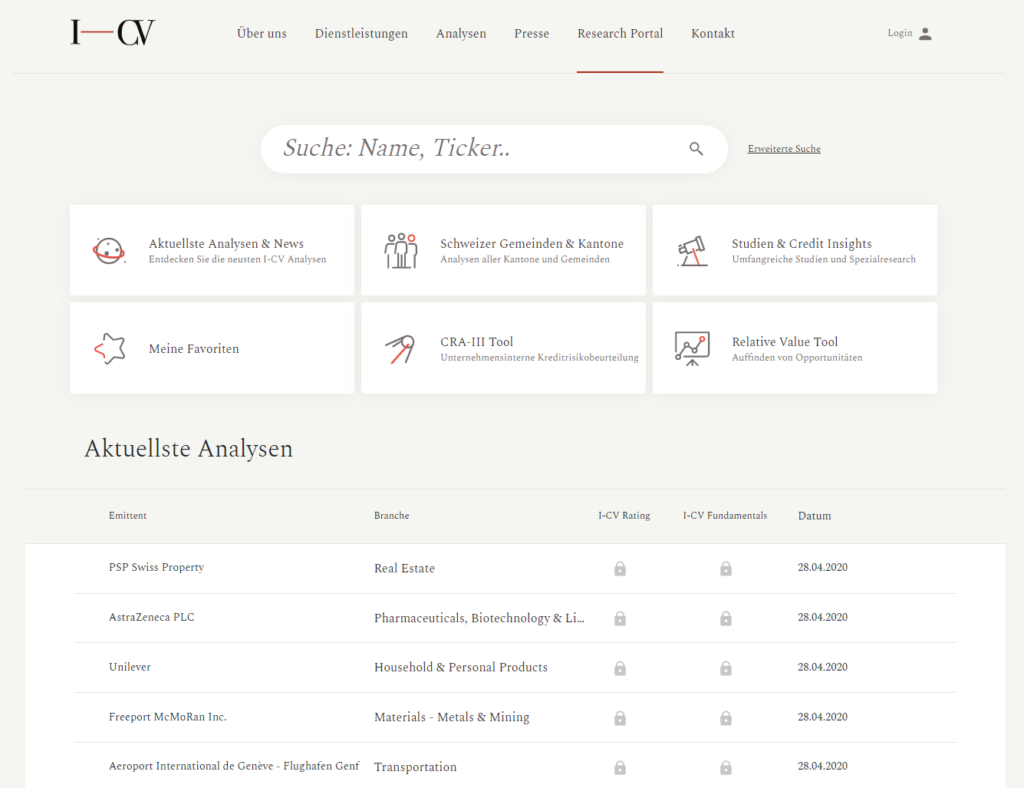
The I-CV Research Portal serves as the central platform to access our analyses, news and studies and as the main gateway to our other tools.
In addition to the search function and an overview of our latest research, you will find additional information on the respective issuer’s page, such as current ratings, the rating history, current and historical reports, a peer overview or relative value information on outstanding bonds.

CRA III Tool
Perform your own internal credit risk assessment
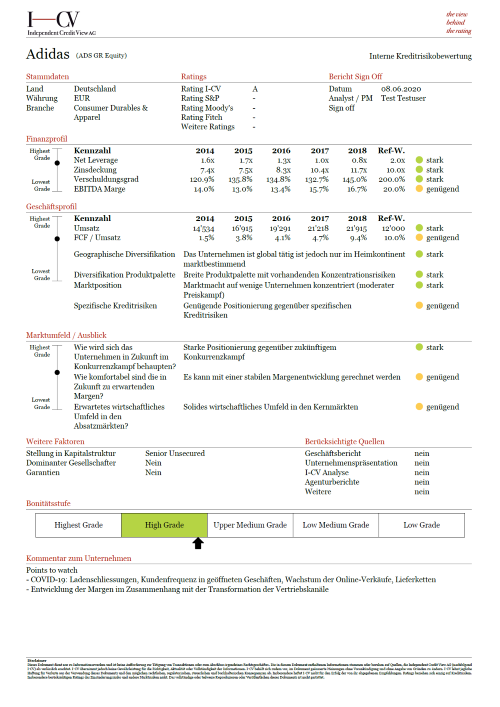
The I-CV CRA-III tool offers you a structured and guided process to conduct an internal credit risk assessment. It enables you to implement and fulfil regulatory requirements (CRA III, Solvency II) as well as internal company risk management guidelines to a high professional standard.
The user-friendly online tool integrates I-CV’s credit expertise with industry-specific data and enables you to assess and review the credit risks of issuers quickly and accurately.
- Structured and guided process for the validation of rating classifications considering all relevant rating factors
- Classification into the relevant risk category as defined by the regulator
- Time-efficient plausibility check on ratings to a high standard
- Access to I-CV expertise and specific know-how in credit analysis
- Extensive database of consistent data evaluated by I-CV (differentiation by 28 industries)
- Memory function for your last assessments as well as for previous year’s values
- Documentation of evaluation and export via PDF
- Efficient and cost-effective generation of tailor-made reports for all issuers in your portfolio

ESG Radar Tool
ESG risk evaluation on the basis of your own value compass
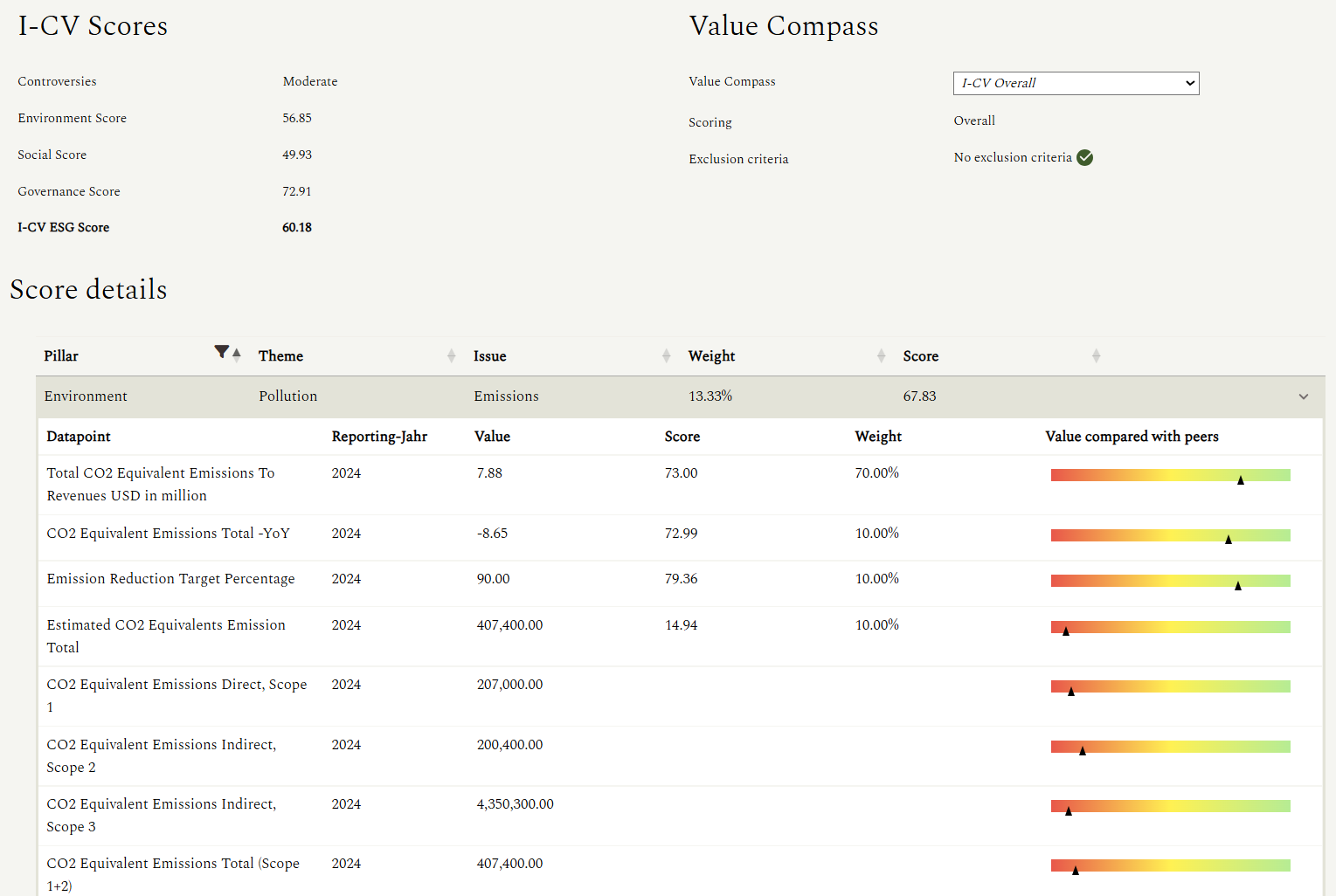
Differentiation using a customer-specific value compass; The individual ESG strategy (value system, methodology) is stored in the system and serves as the basis for evaluating and classifying ESG risks. No adoption of unwanted restrictions.
Market-oriented and forward-looking solution; The guided, IT-supported process facilitates risk assessment and provides a perspective across all asset classes with regard to material ESG risks and their developments.
Dynamic process without unintentional restrictions; By assessing ESG risks independently instead of applying fixed thresholds based on externally dictated scores or ratings, herd behavior is avoided. Active consideration of the relevant ESG factors leads to an independent decision on investability.
Consistent assessment and documentation; All parties involved in the investment process have the same understanding and approach to assessing ESG risks. Consistent documentation of investment decisions and comprehensive portfolio evaluations ensure compliance with internal and regulatory requirements.

Relative Value Tool
Assessment of credit risk premiums
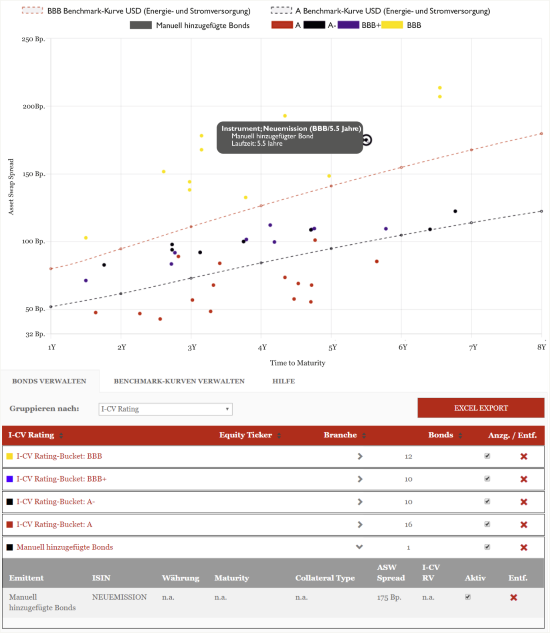
The I-CV Relative Value Tool supports our clients in active portfolio management and provides valuable assistance in assessing adequacy of risk premia and in identifying attractive bonds as investment opportunities.
- Access to over 7’000 credit instruments
- Comparison to I-CV rating benchmark curves
- Support along the investment process (identification of market opportunities / signal for risk reduction)
- Continuity and independence
- Time savings through simple and self-explanatory navigation
- Additional features such as simulation of specific bond parameters or Excel export of personalised selections

Municipality Modell
Swiss Subsovereign Rating Model
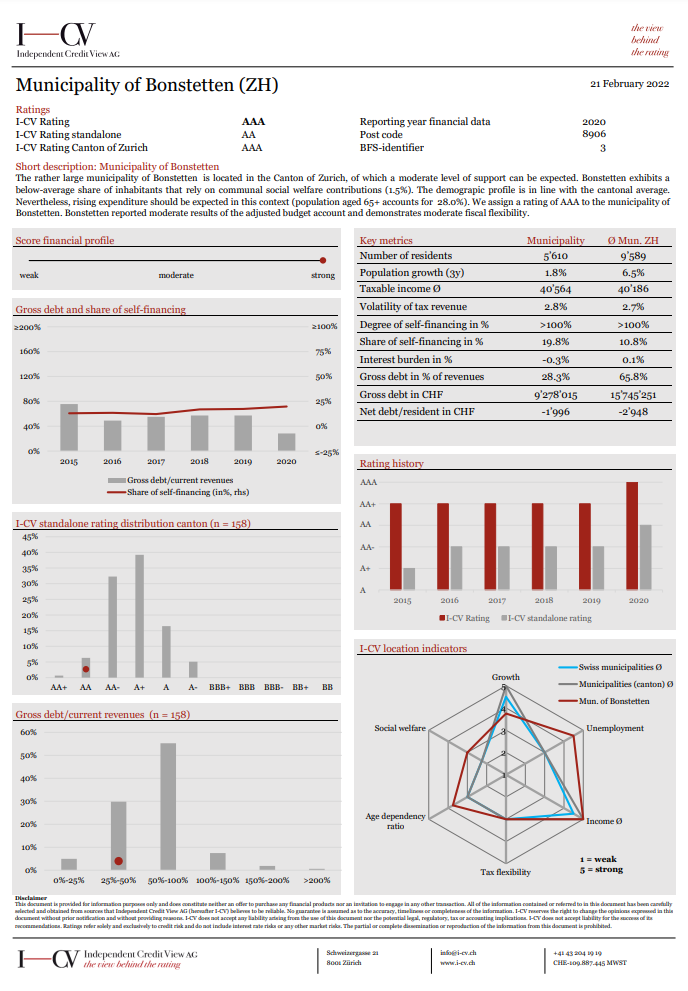
For the selection and monitoring of loans to Swiss municipalities and public-sector entities, we have developed a sophisticated rating approach that combines traditional credit assessment tools with an application-based algorithm. Our reports are available in English, German and French.
The four-phase model is based on the following factors:
Analysis of credit metrics: Quantitative profile of each municipality based on fiscal date such as debt ratio, interest charges and self-financing
Location data: Identification of factors which can be decisive for the future rating development of a municipality
Stand-alone Rating: Intrinsic credit rating based on overall score from credit metrics and location data
Supporting factors: Assessment of legal framework and support factors to determine ability and willingness to provide timely support